Insurers charge different rates for different motorcycle classes because the classes genuinely produce different claims — different frequencies, different severities, different theft patterns. A sport bike isn’t priced higher out of bias against speed; it’s priced higher because, as a class, sport bikes generate more and costlier insurance losses. Understanding your class is understanding a big slice of your rate.
Key takeaways
- Class is one of the heaviest rating inputs. Insurers group bikes because claims data shows classes behave differently.
- Sport bikes cost the most to insure as a class — higher claim frequency and severity, plus strong theft exposure.
- Cruisers and touring bikes generally rate lower — different riding patterns, different loss profiles.
- Engine size multiplies the class effect. A big-engine sport bike and a small-engine sport bike are not rated the same.
- Scooters and small standards are typically the least expensive classes — lower speeds, lower values, calmer loss data.
On this page
- Why insurers think in classes
- Sport bikes: the expensive class
- Cruisers: the moderate middle
- Touring bikes: big, pricey, but calm
- Standard/naked and dual-sport/adventure
- Scooters: the gentle end of the scale
- What to check before you buy the bike
- Frequently asked questions
- Your concrete next step
Why insurers think in classes
An insurer doesn’t price your motorcycle in isolation. It prices your motorcycle as a member of a class, because classes are where the statistical power lives. One rider’s crash history is anecdote; ten thousand sport-bike policy years is data.
The Highway Loss Data Institute (HLDI) — the research arm that tracks insurance losses across vehicle types — publishes analyses of motorcycle insurance losses by class. The consistent finding, in direction if not in any single number worth quoting here, is that loss results differ substantially across classes: sport models show worse collision and theft loss patterns than cruisers and touring models. Insurers build those patterns into their class rating factors.
Three mechanisms drive the class differences:
- Claim frequency — how often bikes in the class generate claims. Aggressive riding positions and high power-to-weight ratios correlate with more crashes.
- Claim severity — how bad the claims are. Higher speeds mean harder impacts: more bike damage, worse injuries.
- Theft exposure — some classes are stolen more often. Sport bikes are perennial theft targets: desirable, easy to part out, easy to move.
None of this is a judgment on individual riders. Plenty of sport-bike owners ride responsibly for decades; plenty of cruiser owners crash. Class rating is about group statistics, and groups are what make insurance pricing possible. Our broader explainer on how rates are calculated puts class in context with the other rating factors.
Sport bikes: the expensive class
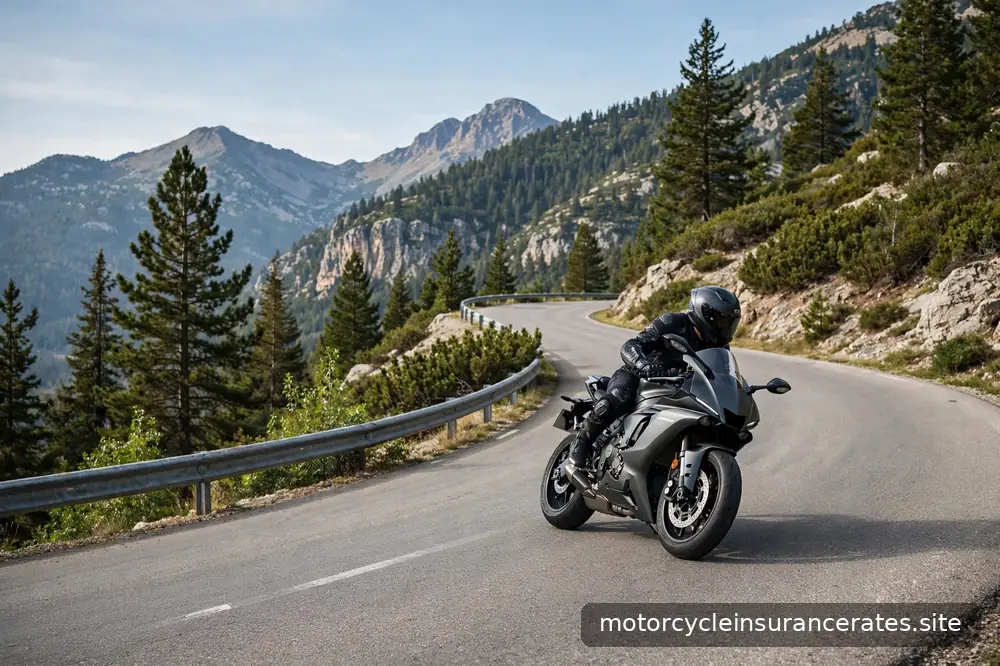
Sport bikes — supersports, liter bikes, aggressive race-replica machines — sit at the top of the rate ladder, and it’s not close. The reasons stack:
Performance. A modern 1000cc supersport makes superbike-level power in a package weighing less than 450 pounds. That power-to-weight ratio means triple-digit speeds arrive in seconds, and the consequences of a mistake scale with speed. Insurers see the severity pattern clearly in their data.
Rider demographics. Sport bikes disproportionately attract younger, less experienced riders — the same group that already rates highest on age and experience. The class factor and the rider factor compound, which is why a young rider on a supersport faces the steepest rates in motorcycling.
Theft. Sport bikes are among the most stolen motorcycles: high demand for parts, easy to strip, easy to transport. Comprehensive coverage — which pays for theft — prices that exposure directly.
Repair costs. Full fairings are expensive to replace, and a low-speed drop that would scuff a naked bike’s bar end can crack thousands of dollars of sport-bike bodywork. Collision severity reflects this.
None of this means sport bikes are “uninsurable” — they’re insured every day. It means the class carries the highest base rate, and everything else in your profile (age, record, garaging) builds on that base. And if the track is calling, know this before you go: track days, stunts, and racing are typically excluded from standard motorcycle policies — the street policy and the track are two different worlds.
Cruisers: the moderate middle
Cruisers — the V-twin crowd, from mid-size metrics to big American iron — generally rate well below sport bikes. The riding pattern explains most of it: upright ergonomics, relaxed power delivery, and a culture of cruising rather than carving. Lower speeds and calmer riding produce fewer and less severe claims as a class.
That said, “cruiser” is a wide tent, and the details matter:
- Engine size still counts. A 1800cc cruiser is rated differently from an 800cc one — displacement bands apply within the class.
- Value matters. Big cruisers are expensive motorcycles, so the comprehensive and collision portions reflect real bike value.
- Customization is common. Chrome, pipes, custom paint — cruiser culture loves add-ons, and standard policies typically cover factory parts only. Aftermarket parts usually need to be declared and scheduled separately — check your policy’s definition of covered equipment.
The cruiser lesson generalizes: class sets the neighborhood, but displacement, value, and modifications set the address.
Touring bikes: big, pricey, but calm
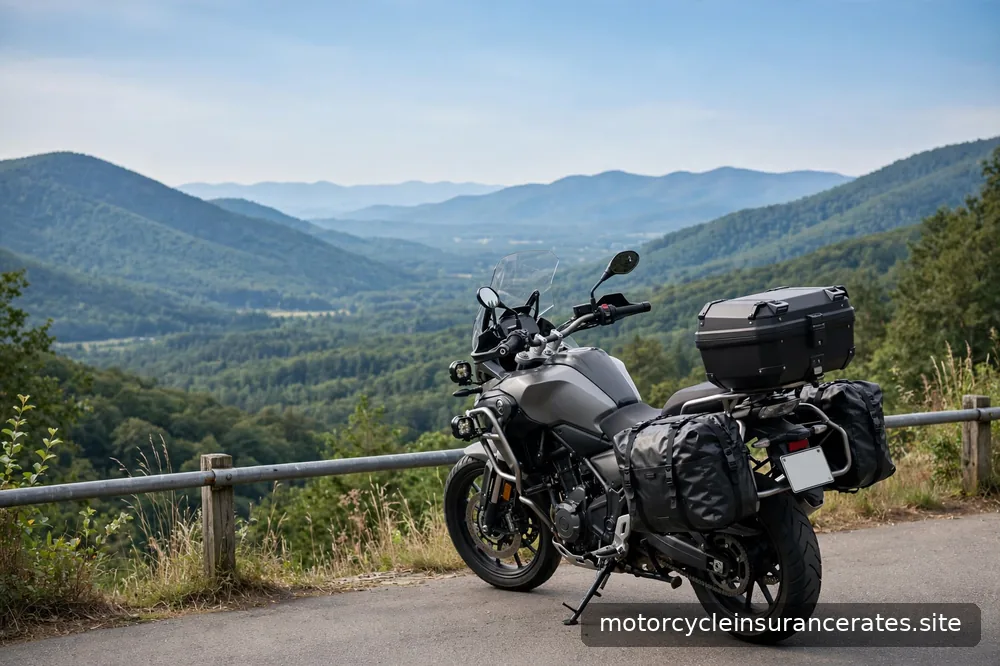
Touring motorcycles — full-dress tourers, luxury baggers — are the heavyweights: big engines, big fairings, big price tags. You’d expect big rates, but the class actually rates relatively calmly. Why? The rider profile and use pattern: touring riders skew experienced, ride long highway miles (statistically the safest kind of mile), and crash less often per mile than any other class.
The counterweight is value. A top-shelf tourer can cost as much as a car, so the comprehensive and collision premiums reflect genuine replacement exposure. And touring bikes carry luggage, electronics, and accessories whose coverage needs attention — factory systems are covered; added electronics and custom luggage may need scheduling.
The touring profile is a good illustration of how rating factors interact rather than add: high value pushes up, calm class history pushes down, experienced rider profile pushes down further. The net is moderate — not cheap, not punishing.
Standard/naked and dual-sport/adventure
Standard/naked bikes — the upright, unfaired all-rounders — are the quiet value play of motorcycle insurance. Moderate power, no expensive fairings to crack, a broad and relatively calm rider demographic. They consistently rate among the most affordable classes to insure, which is one reason they’re the default recommendation for new riders: cheaper to buy, cheaper to drop, cheaper to insure.
Dual-sport and adventure bikes are the interesting middle case. They’re ridden both on-road and off — and off-road use introduces a wrinkle: standard policies typically cover on-road operation, and the off-road portion of a dual-sport’s life may fall outside standard coverage language. Rates for the class are generally moderate, reflecting modest power and a mature rider demographic, but riders who actually take them off-road should read their policy’s exclusions and ask their agent what “off-road” means to their insurer.
Scooters: the gentle end of the scale
Scooters and small-displacement machines sit at the gentle end of the insurance scale: low speeds, low values, low severity. A 150cc scooter simply cannot generate the claim severity of a liter bike, and the rating reflects that.
There’s a classification wrinkle worth knowing: whether your scooter is legally a “motorcycle” (needing motorcycle insurance) or a “moped” (with different rules) depends on your state’s definitions — usually engine size and top speed thresholds — and those definitions vary by state. Our decoder on scooters, mopeds, and e-bikes walks through how the classifications work and where to look yours up.
What to check before you buy the bike
Because class moves the rate so much, the smartest insurance decision happens before the purchase, not after. A few practical habits:
Get a quote before you buy. Not a commitment — just a quote, with the actual VIN or at least the exact year, make, model, and displacement. The difference between two bikes you’re considering can be eye-opening, and it’s free information.
Compare within your shortlist, not against the internet. Forums will tell you what someone in another state with another insurer pays for a similar bike. That number tells you nothing about your rate. Two quotes on the two bikes you’re considering, from the same insurer, with identical coverage — that’s real information. For the shopper’s-eye view of the same inputs, see how much motorcycle insurance costs.
Watch the displacement jump. Moving from a 600 to a 1000 in the same class is often a bigger rate jump than moving classes at the same displacement. Insurers’ displacement bands are real thresholds.
Factor the total cost. Insurance is part of ownership cost alongside the payment, gear, maintenance, and tires. A bike that’s slightly cheaper to buy but much pricier to insure isn’t the bargain it looks like.
Remember the rider factors travel with you. The class is only one input. Your age, record, and garaging apply to whatever you buy — our rate calculation guide maps the full set.
Frequently asked questions
Why is my sport bike so expensive to insure even though I’m a safe rider?
Because class rating is about the group’s statistics, not your personal record. Your clean record helps — it just can’t fully offset the class factor. Time, training, and a clean record narrow the gap, but the class base remains.
Will my cruiser rate drop if I add custom parts?
Adding custom parts doesn’t lower your rate — and undeclared custom parts may not be covered if they’re damaged or stolen. Declare significant modifications and ask about scheduled parts coverage.
Do insurers treat a 600cc sport bike differently from a 1000cc?
Yes — displacement bands are an explicit rating input at most insurers, and the jump between bands can be substantial within the sport class.
Is a touring bike cheaper to insure than a cruiser?
Often comparable or slightly higher, depending on value. The touring class history is calm, but the bike values are high — the two factors pull in opposite directions.
If I switch from a sport bike to a standard, will my rate drop?
Almost certainly, assuming everything else stays the same — class is a heavy input. Get a quote on the specific bike before assuming a number.
Your concrete next step
If you’re bike shopping, get insurance quotes on your top two or three candidates this week, with identical coverage limits and deductibles, before you decide. If you already own, check your policy’s class designation for your bike — and if a different class is on your horizon, quote it first. The class decision is a financial decision; make it with numbers, not vibes.
Motorcycle Insurance Compass publishes general educational information about insurance. Nothing here is insurance, legal, or financial advice for your situation. Rating factors and their weights vary by insurer and state — talk to a licensed agent about your specific needs.