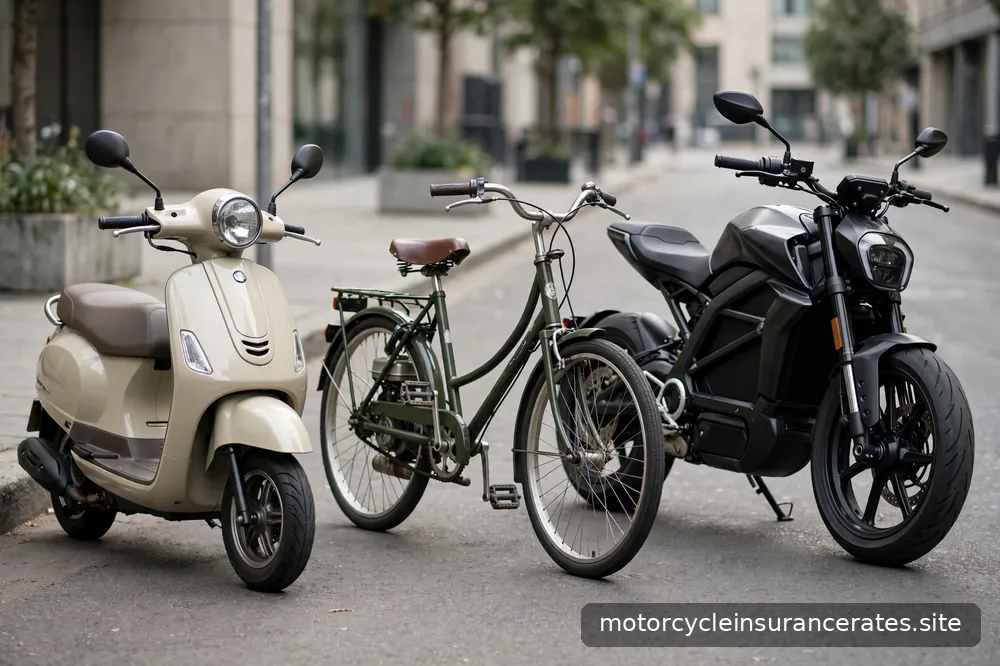
Scooters, Mopeds & E-Bikes: Which Insurance Rules Apply
Whether you need motorcycle insurance for your scooter or moped depends on how your state classifies it — and states draw those lines differently. This guide decodes the categories and shows you how to look up your own rules.
“Do I need insurance for my scooter?” is one of the most-asked questions in two-wheeled life — and the honest answer is “it depends on what your state calls it.” States draw lines between motorcycles, mopeds, and e-bikes using engine size, speed, and equipment — and they draw those lines differently. Insurance and licensing follow the classification.
Key takeaways
Classification comes first. Your state’s legal category for your vehicle — motorcycle, moped, e-bike — determines which insurance and licensing rules apply.
States define these categories differently. Engine-size and speed thresholds vary; a “moped” in one state is a “motorcycle” in another.
Motorcycle-classified scooters need motorcycle insurance just like any motorcycle — same liability requirements, same market.
Moped rules are the most variable — some states require liability insurance, some don’t, and the details change.
E-bikes are generally not motor vehicles under most state laws — but the exceptions and gray zones are worth knowing.
Traffic law needs to sort vehicles by the risk they present and the infrastructure they use. A 150cc scooter mixing with highway traffic is a different proposition from a pedal-assist e-bike in a bike lane — so states created categories with different equipment, licensing, and insurance requirements for each.
The trouble is that no national standard defines the categories. Each state writes its own definitions, typically using some combination of:
Engine displacement (often 50cc as a threshold — above it, motorcycle territory in many states)
Top speed (often around 30 mph as a moped ceiling)
Because the inputs differ, the outputs differ. The same 49cc scooter might be a moped in one state, a motorcycle in another, and subject to entirely different insurance rules in each. This is why every generic “scooter insurance” article that gives you a single answer is wrong for roughly half its readers. The category is a state-law question, and state-law questions need state-law sources.
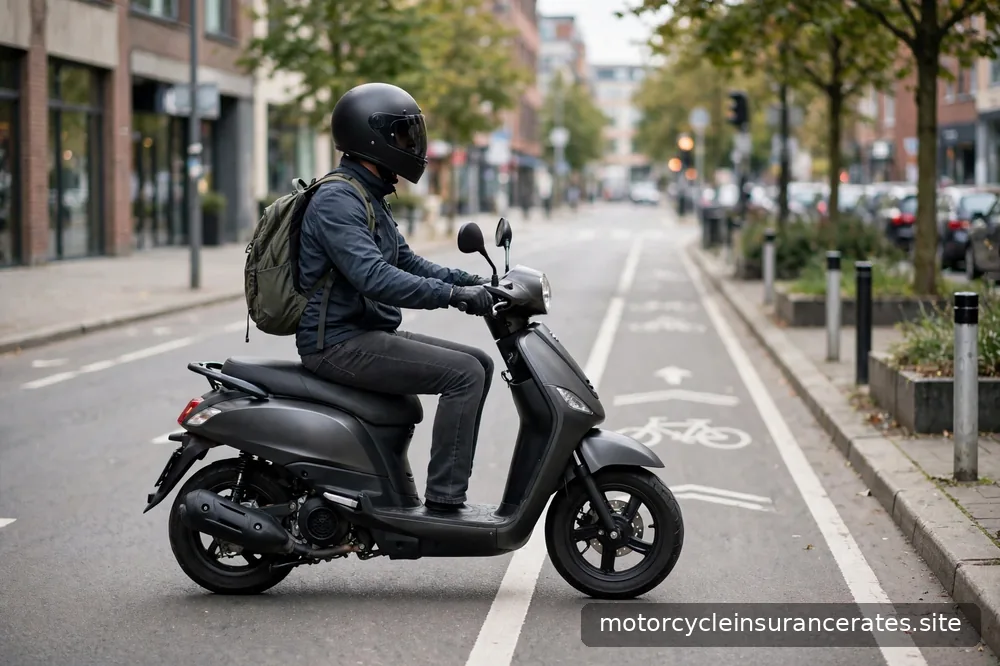
Here’s the surprise for many scooter owners: most scooters are legally motorcycles. Anything above your state’s moped threshold — commonly 50cc, but verify yours — is a motorcycle in the eyes of the law, regardless of the step-through frame, the automatic transmission, or the friendly styling.
That means:
You need a motorcycle endorsement (or license class) to ride it legally — the same as any motorcycle.
You need motorcycle insurance meeting your state’s minimum liability requirements — the same as any motorcycle.
You shop in the motorcycle insurance market — same insurers, same policy forms, same rating factors.
The good news: scooters rate at the gentle end of the motorcycle insurance scale. Low speeds, low values, calm loss data as a class — a 150cc scooter is among the least expensive motorcycles to insure. Our class-by-class look at why bike type changes your rate puts scooters at the affordable end of the spectrum.
The practical mistake to avoid: assuming “it’s just a scooter” means informal rules apply. If your state calls it a motorcycle, the full weight of motorcycle law applies — endorsement, insurance, equipment. The vehicle’s modesty doesn’t change its legal category.
Mopeds: the murky middle
Mopeds — typically defined as small, low-speed two-wheelers, often with pedals in the classic definition — occupy the murkiest territory in vehicle law. State treatment varies enormously:
Some states require moped liability insurance, registration, and a driver’s license.
Some states require registration and a license but not insurance.
Some states treat mopeds almost like bicycles for insurance purposes — no insurance requirement — while still requiring registration.
Definitions shift: the engine-size and speed cutoffs that separate “moped” from “motorcycle” differ, so a vehicle that’s a moped in Ohio might be a motorcycle in the next state over.
This variability is exactly why this guide won’t give you a 50-state table: tables rot, and a wrong table is worse than no table. What you need is the lookup method (below), not someone’s 2023 snapshot of 50 evolving statutes.
One more wrinkle: the word “moped” is used loosely in everyday speech to mean any small scooter. Legally, it has a specific definition in each state — and your insurance obligations follow the legal definition, not the colloquial one. When you look up your rules, search for your state’s statutory definition, not the dealership’s slang.
E-bikes: usually outside motor-vehicle law
Electric bicycles are the newest category and, in most states, the simplest: most states do not classify e-bikes as motor vehicles at all, which means no license, no registration, and no insurance requirement under motor-vehicle law.
Most states have adopted some version of the three-class e-bike system:
Class 1: pedal-assist only, assistance cuts out at 20 mph.
Class 2: throttle-assisted, capped at 20 mph.
Class 3: pedal-assist, assistance up to 28 mph (often with minimum-age and helmet rules, and sometimes restricted from certain paths).
Within these classes, e-bikes are generally treated like bicycles. But the edges deserve attention:
Faster e-bikes — machines that exceed class limits (high-power motors, speeds well above 28 mph) may fall outside the e-bike definition and into moped or motorcycle territory in some states. The marketing term “e-bike” doesn’t control; the specs do.
Homeowners/renters coverage may cover e-bike theft up to limits, but that’s property insurance, not vehicle insurance — and high-value e-bikes may need scheduled coverage.
Liability on an e-bike is a genuine gap worth thinking about: if you injure someone on a fast e-bike, your homeowners personal liability may respond, but e-bike exclusions exist in some policies. It’s worth a question to your agent if you ride a powerful e-bike regularly.
The e-bike world is also where law is moving fastest — states continue to refine these definitions. Check current law, not last year’s blog post (including, eventually, this one).
How to look up your state’s rules
Here’s the method — five steps, about twenty minutes:
Find your state’s statutory definitions. Search “[your state] moped definition” or “[your state] electric bicycle classification” — you’re looking for the DMV or the state legislature’s site, not a blog.
Classify your specific vehicle against those definitions: engine displacement or motor wattage, top speed, pedals, equipment. Write down which category it falls into.
Find the insurance requirement for that category. On the same DMV site or your state insurance department’s site, look for the insurance requirements page for motorcycles/mopeds. Note whether liability insurance is required, and at what minimums.
Check the licensing requirement on the DMV site — endorsement, license class, or nothing — for your category.
Note the date. Write down when you checked. These rules change; a dated note to yourself is how you know when to re-check.
If the definitions are ambiguous for your vehicle — and for modified or high-power e-bikes they sometimes are — call your state DMV or insurance department and ask. A five-minute call beats a ticket or an uncovered crash.
For the motorcycle-classified majority, our plain-English guide to motorcycle insurance is the natural next read — it covers what the policy actually contains once you know you need one.
Insurance shopping by category
Once you know your category, shopping follows:
Motorcycle-classified scooters: Shop the standard motorcycle insurance market. Get quotes the same way any rider would — identical coverage across insurers. Expect gentle pricing relative to larger bikes, but don’t assume — quote it.
Mopeds (where insurance is required): Many motorcycle insurers write moped policies; some auto insurers do too. Where insurance isn’t required, consider it anyway — liability coverage is inexpensive at moped values, and the protection (paying others you injure, plus your legal defense) is the same product that protects motorcyclists.
E-bikes: No motor-vehicle insurance market exists for standard e-bikes because none is required. Your relevant coverages are homeowners/renters (theft) and personal liability (injuries you cause) — review both with your agent if you ride a valuable or fast e-bike.
In every category: the honest shopping principles don’t change — compare identical coverage, read the exclusions, and treat the lowest headline price with suspicion until you’ve compared the declarations.
Gray zones and gotchas
A few traps that catch real people:
The “49cc loophole” isn’t a loophole. Some riders buy 49cc scooters believing they dodge all requirements everywhere. But 50cc isn’t the threshold in every state, and requirements aren’t only about displacement — speed, equipment, and registration rules apply independently. Verify; don’t assume.
Modified vehicles get reclassified. Derestrict a moped or hot-rod an e-bike past its class limits and you may have legally converted it into a motorcycle — with motorcycle licensing and insurance requirements you didn’t have yesterday. Modifications can also void whatever coverage you held.
Rental and borrowed scooters. Tourist scooter rentals in vacation states are a classic gray zone — the rental company’s coverage, your own policies, and the state’s requirements interact in ways worth clarifying before you ride off. Ask the rental operator what’s covered and get it in writing.
Crossing state lines. Your home state’s classification and insurance travel with you in general, but the state you’re riding in has its own equipment and operation rules. For ordinary travel this rarely bites — but know it exists.
Frequently asked questions
Do I need insurance for a 50cc scooter?
It depends on your state: in many states a 50cc scooter is legally a motorcycle and needs motorcycle insurance; in others it may fall under moped rules with different requirements. Look up your state’s classification — don’t guess from the engine size alone.
What’s the difference between a scooter and a moped, legally?
There’s no universal legal distinction — each state defines its categories using displacement, speed, and equipment. “Scooter” describes a vehicle style; “moped” is usually a legal category. Your scooter might legally be a motorcycle, a moped, or neither, depending on the state.
Do e-bikes need insurance?
Generally no, under motor-vehicle law — most states don’t classify standard e-bikes as motor vehicles. But check your state’s current e-bike classes, and review your homeowners/renters policy for theft and liability coverage if you ride an expensive or fast one.
Can I ride my scooter on my car insurance?
No — car insurance doesn’t extend to motorcycles or motorcycle-classified scooters. You need a motorcycle policy (or a moped policy where that’s the category).
I moved states. Do I need to re-check?
Yes — classifications, requirements, and minimums all vary by state. Re-run the five-step lookup for your new state and update your policy and licensing accordingly.
Your concrete next step
Run the five-step lookup for your state today — twenty minutes, DMV and insurance department sites, dated notes. Classify your vehicle, note the insurance and licensing requirements, and check that your current coverage (if any) matches your actual category. If anything doesn’t line up, that’s your next call: to your agent, or to the DMV for clarification. Categories are just lines on paper — until they’re the line between covered and not.
Motorcycle Insurance Compass publishes general educational information about insurance. Nothing here is insurance, legal, or financial advice for your situation. Vehicle classifications and requirements vary by state and change over time — verify your state’s current rules through official sources and talk to a licensed agent about your specific needs.