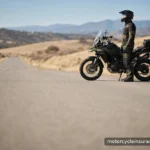
Rally and Road-Trip Season: Insurance Questions for Long Rides
Touring season brings insurance questions that commuting never does. Passengers, expensive gear, out-of-state riding, and roadside assistance — what to check before a long ride.
Long summer rides — rallies, tours, multi-state road trips — raise insurance questions that daily commuting never does. Your policy generally travels with you, but passengers, expensive touring gear, and far-from-home breakdowns each deserve a deliberate check before you roll out.
Key takeaways
Your policy travels with you — standard motorcycle policies cover you across state lines; the questions are about passengers, gear, and assistance, not geography.
Passengers need verified coverage — confirm guest passenger liability before anyone rides two-up on a long trip.
Touring gear and accessories add up fast — luggage, electronics, and custom parts may exceed standard accessory limits; document and declare them.
Out-of-state incidents follow the same claims process, but unfamiliar roads, repair shops, and towing logistics make preparation more valuable.
Roadside assistance is the highest-value check on this list — verify towing distance limits before you need them.
Yes. Standard US motorcycle policies provide coverage throughout the country (territories and Canada vary by insurer — check yours if crossing borders). Your home-state policy follows the bike; no new insurance per state.
The nuances worth knowing:
Liability limits follow your policy, not the state you’re in. If you carry above another state’s minimums, you’re fine there. The edge case — home-state minimums into a higher-minimum state — is rare, but it’s why touring guides say to check the states on your route.
Claims out of state follow the same process. Same claims number, same insurer, same steps. The differences are logistical: unfamiliar shops, longer tows, coordinating repairs from home.
Laws change at state lines; your policy doesn’t. Helmet requirements, lane-splitting rules, and equipment regulations vary by state — and a ticket in another state still lands on your record back home. Look up helmet laws by state before a multi-state trip; it’s the most common cross-state compliance question.
Passengers on long rides: verify before you go
Before anyone climbs on for a multi-day trip, verify the coverage picture deliberately.
Confirm guest passenger liability. Availability, structure, and limits vary by insurer and state — some policies include it, some offer it as an option. Call your agent for a straight answer: is my passenger covered, under what coverage part, up to what limit? Ask before the trip, not after an incident.
Our dedicated explainer on guest passenger liability covers the mechanics in depth — what’s covered, what varies, and which questions to ask your agent.
Think about the passenger’s own protection. Your passenger’s medical costs in a serious incident can exceed your passenger liability limits quickly. Do they carry their own health insurance? Do they understand your policy’s coverage for them? Awkward conversations — have them over dinner, not in an emergency room.
Two-up touring changes the bike. Extra weight changes braking, cornering clearance, suspension, and tire pressures — adjust for the load per the manufacturer’s two-up specs. Practice loaded handling before the trip: parking lots first, then familiar roads, then highway.
Gear for two. Your passenger needs the same protection you wear: real, undamaged, properly fitting helmet, jacket, gloves, boots. “Just along for the ride” is not a safety plan.
Gear, luggage, and accessories: the touring math
A touring bike accumulates value gradually, then all at once — saddlebags, top case, GPS, communicators, lighting, custom seat, engine guards: individually modest, collectively worth thousands. The insurance reality: standard collision and comprehensive typically covers the factory bike, not the additions.
Before a long trip, do the touring inventory:
1. List everything added to the bike. Walk around with your phone and photograph every accessory, then list them with approximate values. Include luggage and its contents — riding gear packed in saddlebags has value too.
2. Compare the total against your accessory coverage. Many policies include a modest accessory/custom-parts limit by default, with higher limits available by endorsement. If your touring setup’s value exceeds your limit, you’re self-insuring the difference on every mile of the trip. Ask your agent about raising the limit for the season — it’s typically inexpensive relative to the values protected.
3. Understand what’s covered where. Accessories attached to the bike generally fall under accessory coverage; gear you’re wearing may or may not be covered; electronics in luggage might be a homeowners/renters question. Ask your agent before the trip rather than discovering the boundaries in a claim.
4. Document everything. Photos of installed accessories, receipts, serial numbers on electronics. Store copies off the bike (cloud storage, email to yourself). After a theft from a motel parking lot is the worst time to reconstruct what was in the bags.
Long trips put you on unfamiliar roads, in unfamiliar traffic patterns, around drivers whose behavior you can’t predict — which is precisely the scenario uninsured/underinsured motorist (UM/UIM) coverage exists for.
The concept, briefly: UM/UIM is the part of your policy that steps in when an at-fault driver can’t pay — no insurance, too little, or a hit-and-run. For motorcyclists it primarily covers medical costs and lost wages; some policies extend it to property damage.
Why it matters more on tour: unfamiliar roads mean less margin for others’ mistakes — a drifting driver on an unknown mountain road is harder to anticipate than on your commute. And medical costs far from home — emergency transport, out-of-network care — escalate fast.
Check your UM/UIM limits before the trip. Many riders carry UM/UIM below their liability limits — sometimes at state minimums — without realizing the mismatch. Look at the numbers consciously against the medical-cost exposure of a serious touring incident. Our explainer on uninsured motorist coverage for riders covers the mechanics in full.
Roadside assistance: read the fine print now
Roadside assistance is the most likely item on this page to be used on a long trip — and the most likely to disappoint unread. A flat tire 80 miles from town is solvable with good coverage, miserable without it.
Check these specific terms:
Towing distance limit. This is the big one. A 15- or 25-mile tow benefit sounds fine until you’re 60 miles from the nearest shop that can handle your bike. Know your limit, and know what the per-mile charge beyond it looks like.
Motorcycle-specific towing. Bikes can’t ride on a standard wheel-lift. Confirm your coverage dispatches flatbed or motorcycle-capable towing — and that the dispatcher knows it’s a motorcycle when you call.
Trip interruption benefits. Some roadside plans include lodging and meal reimbursement if a breakdown strands you overnight. Know whether yours does, and the daily limits.
Service call caps. How many roadside events per term? What’s the per-event cap? A long tour with an aging bike can use more than one.
The number to call. Save the roadside dispatch number in your phone — not just the general claims line. At the roadside, with a dead phone battery and fading light, you don’t want to be navigating a phone tree.
Consider the bike’s age and condition honestly. A three-year-old bike and a fifteen-year-old project have different breakdown probabilities. Touring on the latter, robust roadside coverage isn’t optional — it’s trip planning.
The rally-specific questions
Rallies add their own wrinkles beyond ordinary touring:
Organized ride exclusions. Some rallies include organized group rides, poker runs, or demo events. Your standard policy covers normal street riding to, from, and around the rally — but if the event includes anything timed, competitive, or on a closed course, the racing exclusion applies. When in doubt about a specific event format, ask the organizer what the riding involves and check it against your policy’s exclusion language.
Concentrated bike theft risk. Thousands of desirable bikes parked together in an unfamiliar town — efficient shopping for thieves. Prevention matters most: disc locks, covers, well-lit parking near your lodging, never leaving keys or luggage unsecured. And check your comprehensive deductible is one you can actually pay.
Demo rides and borrowed bikes. Demo fleets typically carry their own coverage with a liability waiver you’ll sign — read it. Borrowed bikes are murkier: the owner’s policy usually follows the bike, but confirm with the owner first. Never assume.
Alcohol and the rally scene. The insurance note: alcohol involvement in an incident gives insurers coverage defenses and legal complications a sober incident doesn’t. The rally is more fun when the two don’t mix.
Packing your insurance for the trip
The physical checklist, to be completed the night before departure:
Current insurance card — this term’s card, on the bike and in your phone.
Registration — current, matching the bike.
Roadside dispatch number — saved in your phone, not just on a card.
Agent’s contact — for the “is this covered?” questions that arise mid-trip.
Emergency contacts and medical info — an ICE card in your jacket; make sure your riding companions know about it.
Photos of the loaded bike — all four sides, odometer, accessories, luggage. If anything happens on day four, day-one photos are your baseline.
A small incident kit — pen, notepad, and a printed card with the documentation steps (photos, info exchange, no fault admissions). Phone batteries die; paper doesn’t.
Frequently asked questions
Is my motorcycle insurance valid in other states?
Yes. Standard US motorcycle policies cover you throughout the country — your home-state policy travels with the bike. Liability limits follow your policy. The things that change at state lines are traffic laws (helmets, lane splitting, equipment rules), not your coverage.
Do I need extra insurance for a rally?
For ordinary rally attendance your standard policy suffices. Anything timed, competitive, or on a closed course falls under racing exclusions — and the elevated theft exposure is a prevention and deductible question.
What happens if I break down far from home?
Call your roadside dispatch number. Know your towing distance limit before the trip — the term most likely to matter. If the bike can’t be fixed locally, trip-interruption benefits help with stranded-overnight costs.
Are my passenger and I covered the same way out of state?
Coverages don’t change at state lines — what changes is logistics: unfamiliar hospitals, out-of-network questions. Carry your health insurance cards too, not just the bike’s.
Should I raise my accessory coverage for one trip?
If your touring setup’s value exceeds your current accessory limit, raising it for the season is worth pricing — it’s typically inexpensive. At minimum, document everything before departure. The documentation costs nothing and pays off in any claim.
What if I rent a motorcycle for part of the trip?
Rental bikes are usually covered by the rental company’s insurance, which you’ll be offered (and charged for) at pickup — read what it includes and its deductibles. Your own motorcycle policy generally doesn’t extend to rentals the way auto policies sometimes do for rental cars. Check with your agent before relying on any assumption.
Your concrete next step
Before your next long ride, make the passenger-coverage call and the roadside check — twenty minutes combined, the items most likely to matter. Photograph the loaded bike, save the dispatch number, confirm accessory limits against what’s strapped on. Then ride — the preparation should be invisible, so the trip is about the road.
Motorcycle Insurance Compass publishes general educational information about insurance. Nothing here is insurance, legal, or financial advice for your situation. Coverage options and state rules vary — read your own policy and talk to a licensed agent about your specific needs.