The hidden gap in motorcycle insurance: standard collision and comprehensive cover factory equipment, not your modifications. This guide explains custom parts coverage, what counts, and how to document every dollar you've put into the bike.
Standard motorcycle collision and comprehensive coverage typically pays for factory equipment only — your chrome, custom paint, aftermarket exhaust, and saddlebags are usually valued as stock, or capped at a low amount. If you’ve put real money into the bike, custom parts/equipment coverage is the separate line item that covers it, and documenting your modifications is what makes it pay.
Key takeaways
Factory parts are the default. Standard policies value your bike as it left the factory; modifications are the gap.
Custom parts/equipment coverage is a separate line item with a stated amount you choose — not automatic.
“Permanently attached” is the usual boundary — bolted-on parts are covered; portable gear often isn’t (or needs its own add-on).
Documentation is the claim. Receipts, photos, and a running mods list turn a disputed valuation into a paid one.
Tell your insurer about major mods when you buy the policy, not after the crash — undisclosed modifications can complicate claims.
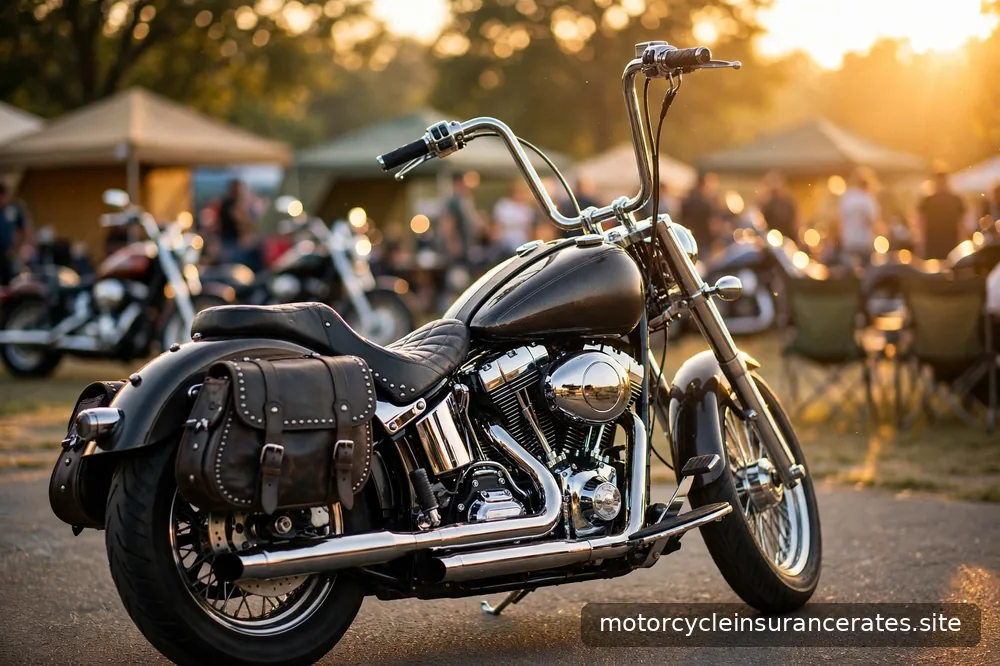
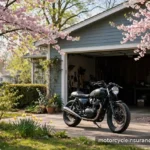
Picture the claim: your customized cruiser — $4,000 in chrome, custom paint, aftermarket exhaust, leather saddlebags — is stolen. You file the comprehensive claim expecting the bike as it was to be valued. The adjuster values it as it left the factory.
This isn’t bad faith; it’s the contract. The Insurance Information Institute states it directly: many comprehensive and collision policies will only cover the factory standard parts on your motorcycle, or will limit the coverage — if you add chrome parts, a custom paint job, trailers, or sidecars, check with your insurer to understand the limits of coverage. (Source type: industry educational body — III)
Most policies include some small amount for accessories — often a nominal included figure — but it’s designed for a phone mount, not a paint job. Riders routinely discover this gap at the worst possible moment: after the loss, when the valuation comes back thousands below what the bike was actually worth to them.
The gap has three layers, and each needs its own answer:
Parts that replace factory equipment (exhaust, suspension, lighting) — valued as stock unless scheduled.
Parts that add to the bike (saddlebags, fairings, custom paint) — invisible to the standard valuation unless scheduled.
Gear you wear (helmet, jacket, gloves) — personal property, not part of the bike at all, and usually outside the policy entirely.
“Custom parts and equipment” is insurer shorthand for non-factory additions and modifications permanently attached to the motorcycle. The usual categories:
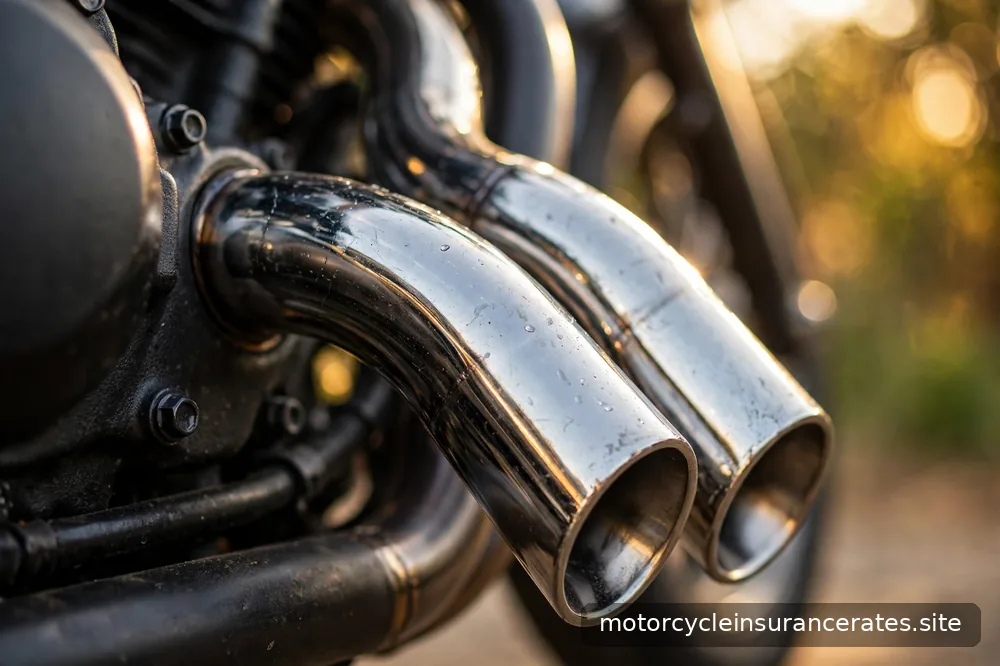
Performance and mechanical: aftermarket exhaust systems, suspension upgrades, engine modifications, air intake kits, ECU tuning hardware. These change how the bike runs — and some can affect your rate, because insurers price performance modifications as risk.
Appearance: custom paint, chrome packages, powder coating, custom wheels, LED lighting kits, wraps. High-visibility, high-value, and the most commonly underinsured category — a quality paint job alone can exceed the bike’s book value.
Comfort and touring: saddlebags and top cases (hard-mounted), windscreens, heated grips, cruise control add-ons, upgraded seats, highway pegs. The touring rider’s money lives here.
Trailers and sidecars: often called out explicitly in policy language — III names both as items to verify. They may need to be scheduled by name, not just covered under a blanket amount.
What usually doesn’t count: portable items (tank bags that come off, GPS units, action cameras), riding gear (helmets, jackets — personal property), and maintenance replacements (a stock-equivalent tire isn’t a “mod”).
The gray zone: quick-release windscreens, detachable luggage, phone mounts. “Permanently attached” is the typical policy test — bolted on counts, strapped on might not. When in doubt, ask your insurer in writing how a specific item is classified. The answer goes in your file, not just your memory.
How custom parts coverage works
Custom parts/equipment coverage is typically sold as an endorsement (add-on) to your collision and comprehensive — a stated amount you choose, like $3,000 or $5,000, covering your scheduled modifications.
You choose the amount. Add up what you’ve spent on mods (receipts help — more below) and choose a stated amount that covers it. Too low and you’re underinsured on the mods; too high and you’re paying premium for phantom value. Revisit the amount when you add major mods — the $5,000 you chose two years ago doesn’t cover the $3,000 paint job you added last spring.
It usually covers theft and damage to the parts themselves. If the bike is stolen, the custom-parts amount pays for the scheduled mods on top of the bike’s book value. If a crash damages your aftermarket fairing, the parts coverage pays the difference between stock valuation and actual replacement.
Deductibles apply. The custom-parts endorsement typically carries its own deductible (sometimes matching your comprehensive/collision deductible). Know which one applies before you need it.
Performance mods can move your rate. Insurers ask about modifications partly to value them and partly to price them — an exhaust that adds significant power changes the risk profile. This is normal underwriting, not punishment. The alternative — undisclosed performance mods discovered after a crash — is worse in every way.
Agreed value for special bikes. For heavily customized, classic, or show bikes where book value is meaningless, some insurers offer agreed value coverage: you and the insurer agree on the bike’s total value (including mods) when the policy is written, and that’s the total-loss payout. If your bike’s real value lives mostly in customization, ask whether agreed value is available — it’s the mechanism designed for exactly that situation.
Gear: helmets, jackets, and the portable problem
Your $600 helmet, $800 jacket, $200 gloves, $300 boots — roughly $2,000 of safety equipment that the base motorcycle policy almost certainly does not cover. Here’s why, and what to do:
Why it’s excluded. Gear is personal property, not part of the motorcycle. Your bike policy insures the vehicle; the jacket on your back is legally closer to the clothes in your closet. Standard collision and comprehensive don’t see it.
What sometimes covers it. Some insurers offer a gear/accessory add-on or include a small gear allowance in their custom-parts endorsement — but “sometimes” and “small” are doing heavy lifting. Coverage varies widely by insurer; a few hundred dollars of included gear coverage is common where it exists at all.
What reliably covers it. Your homeowners or renters policy often covers personal property — including gear — against theft (and sometimes damage), subject to its own deductible and limits. A helmet stolen from the bike might be a renters-policy claim, not a bike-policy claim. Know which policy answers before you need one.
The crash-damage problem. Gear damaged in a crash (helmet impact, jacket road rash) is the hardest to cover — it’s neither bike damage nor, usually, a scheduled item. Some riders replace crashed helmets out of pocket as a matter of course (a crashed helmet should be replaced anyway — the foam did its job once). Budget for it rather than insuring it.
Practical minimum: photograph your gear with receipts, like your mods. If any of your policies covers it, documentation is what makes the claim smooth. If none does, at least you know — and knowing is the point of this guide.
Documenting your mods: the system that pays
Documentation is the difference between “my bike had $6,000 in mods, trust me” and a paid claim. Build the file now; it takes an hour and pays for itself forever.
The mods list. A running document — spreadsheet, notes app, paper in the owner’s manual pouch — with every modification: what it is, when installed, what it cost, who made it. Update it when you mod, not “later.”
Receipts. Keep every receipt for parts and labor. Digital receipts in a dedicated email folder; paper receipts photographed. The receipt is the valuation evidence — without it, the adjuster prices your custom exhaust as a stock pipe.
Photos. Photograph the bike from all angles after major mods, plus close-ups of each significant addition. Date-stamped photos prove the mods existed before the loss — which is the entire evidentiary battle in a disputed valuation.
Before-and-after for big work. Custom paint, major builds, restoration — photograph the process, not just the result. Process photos are unusually persuasive evidence of value.
Share it with your insurer. When you buy or increase custom-parts coverage, give your agent the mods list and total. It aligns the stated amount with reality and creates a paper trail that the insurer knew what was on the bike. An insurer that accepted premium for $5,000 in scheduled parts has a much harder time disputing those parts later.
Store a copy off the bike. Phone photos are good; cloud backup is better. If the bike is stolen with your phone in the saddlebag, the documentation shouldn’t go with it.
The disclosure conversation
When you buy or renew, have the modifications conversation proactively. It goes like this:
What to disclose: any modification beyond stock — performance, appearance, touring additions. Not the phone mount; yes the exhaust, the paint, the suspension, the sidecar.
Why it helps you: disclosed mods get properly valued and properly covered. The insurer prices the actual risk and charges the actual premium. No surprises at claim time.
What happens if you don’t: undisclosed modifications discovered after a loss can complicate or reduce the claim — the insurer priced a stock bike and got a modified one. In extreme cases involving undisclosed performance modifications, it can become a material-misrepresentation issue. The downside of disclosure is a slightly higher premium; the downside of non-disclosure is a disputed claim.
How to have it: “I’ve added the following modifications since last renewal” — then the list, with costs. Ask: “Is my custom-parts stated amount still adequate? Are any of these mods excluded or surcharged?” Get answers that matter in writing (email counts).
When to have it: at purchase, at renewal, and whenever you add a major mod mid-term. Mid-term additions can usually be scheduled immediately — you don’t have to wait for renewal to cover the new paint job.
Are aftermarket parts automatically covered?
No. Standard collision and comprehensive value the bike as factory equipment. Aftermarket parts need custom parts/equipment coverage — a separate stated amount you choose and pay for.
Does custom parts coverage raise my premium a lot?
It adds premium proportional to the stated amount — modest for a few thousand in accessories, more for a heavily customized bike. The honest way to find out is a quote with and without the endorsement; the difference is usually smaller than riders expect.
Is my helmet covered if it’s stolen with the bike?
Usually not under the bike policy — gear is personal property. Check whether your insurer offers a gear add-on, and check your homeowners/renters policy, which often covers personal property theft.
What if I bought the bike already modified?
Document what you can (photos, seller’s records, a shop’s assessment), disclose it to your insurer, and schedule custom-parts coverage for the mods’ value. “It came that way” still needs documentation to be valued.
Do I need to tell my insurer about a new exhaust?
Yes — disclose modifications beyond stock. It ensures proper valuation and coverage, and avoids claim complications. Performance modifications can affect your rate; that’s normal underwriting.
Your concrete next step
Today, start the mods list: walk around your bike with your phone and photograph every non-factory item, then write down what each one cost (check old receipts or look up current prices). Total it. Compare that total to your policy’s custom-parts or accessory coverage — if you have any. If the total exceeds the coverage, or you have no such line item at all, you now know exactly what to discuss with your agent.
Motorcycle Insurance Compass publishes general educational information about insurance. Nothing here is insurance, legal, or financial advice for your situation. Policy language varies by insurer and state — read your own policy and talk to a licensed agent about your specific needs.